
Calculate body fat percentage

Choose a method by the inputs you have. See how each calculation reaches its estimate.
- Inputs178 · 38 · 90 cm Height / Neck / Waist
- Formulalog₁₀U.S. Navy method
- Result20.1%Body fat
Enter height, neck and waist; add hips for the female formula. Weight and age are optional: together they add the BMI-method estimate. Choose cm/kg or inches/lb.
Body fat percentage calculation: a worked comparison
Fictional adult inputs, evaluated with the same formulas as the calculator. These are estimates, not measured body fat.
Navy
16.9%Male · 175 cm · waist 84 cm · neck 37 cm
The circumference equation uses waist minus neck, together with height.
RFM and BMI method
22.3% / 22.8%Same profile · weight 76 kg · age 40
RFM gives 22.3%; BMI 24.8 plus age and sex gives 22.8%. These are separate estimates.
How to calculate body fat percentage at home

1. Choose your inputs
Select the formula sex and units. Enter your own numbers; placeholders are examples, not prefilled measurements.

2. Calculate in your browser
Get an estimate without an account or payment. The calculator runs locally; these entries are not submitted or saved.
3. Keep the method with the result
Record the formula, date and measurement conditions. Compare like with like at later check-ins rather than averaging different methods.
Take repeatable measurements at home
Height and neck
Measure height without shoes. Place a snug, non-stretch tape just below the larynx for the neck; keep your shoulders relaxed.
Waist / abdomen
For Navy, men use the abdomen at the navel; women use the narrowest natural waist. Keep the tape level and read after a normal exhale.
Hips and repeat checks
The female Navy formula needs the fullest hip circumference. Repeat readings without pulling the tape tight, and use the same positions each time.
The Navy and RFM comparison uses the same waist entry as a rough cross-check. The original RFM protocol uses the upper border of the hip bone; a different tape location can shift the comparison.
Navy measurement guide (February 2025)Calculate fat percentage: body measurements and method choice
Navy needs neck and waist plus height, with hips for women. RFM needs height and waist. Deurenberg uses BMI, age and sex, so it can be used without circumferences. Their sex codes differ: follow the labels below.
Navy — male
Body fat % = 495 / [1.0324 − 0.19077 × log₁₀(waist − neck) + 0.15456 × log₁₀(height)] − 450
Navy — female
Body fat % = 495 / [1.29579 − 0.35004 × log₁₀(waist + hips − neck) + 0.221 × log₁₀(height)] − 450
Relative fat mass
RFM % = 64 − 20 × (height / waist) + 12 × S; S = 0 male, 1 female
BMI-based Deurenberg method
Body fat % = 1.20 × BMI + 0.23 × age − 10.8 × S − 5.4; S = 1 male, 0 female
Navy lengths are in cm after unit conversion; log₁₀ is the base-10 logarithm. RFM uses a height-to-waist ratio in matching units. BMI uses kg and metres. Outputs are rounded to one decimal; this is display formatting, not a personal precision guarantee. Navy is bounded to 2–60%; RFM below 2% is refused and above 60% is bounded.
Pick the calculation that fits your inputs
A tape measure is available
Use the Navy tool above. RFM provides a simpler ratio comparison. Follow the original tape protocol when you need a method-specific reading.
Only weight and height are available
Add age and choose the formula sex for a BMI-based estimate. It reflects a population relationship and cannot distinguish muscle from fat in an individual.
No measurements are available
A photo can provide a visual range. It does not calculate internal tissue composition, and lighting, pose and clothing affect the estimate.
Add a separate photo perspective
Visible contours offer a different kind of estimate. Use a relaxed front photo with even light and fitted sportswear; the photo tool returns a range with notes on the setup.
Keep photo and formula results separate. A mismatch is a reason to review the inputs, not proof that one method verifies the other.
Check from a photo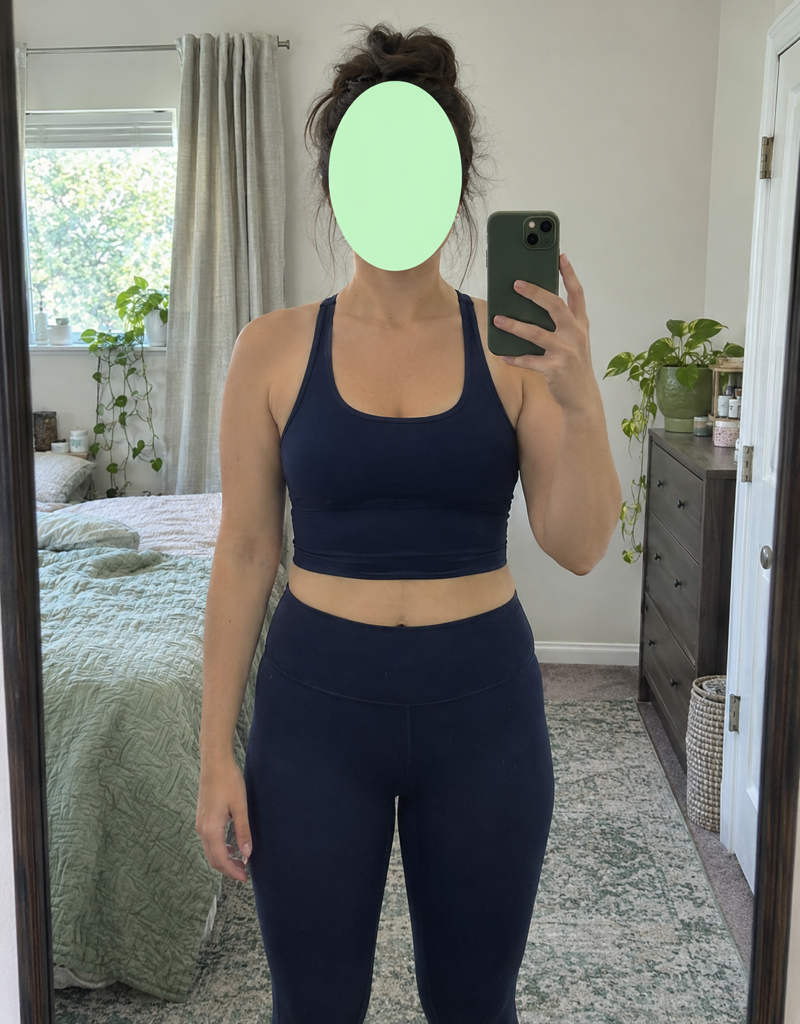
Separate methods, separate estimates
Photo: 16–24% · Navy: 19.1%
Illustrative range and fictional calculation; neither measures the pictured person.Read an estimate with its limits
These equations estimate whole-body fat indirectly. Tape placement, individual proportions and the populations behind the equations affect the result. Small changes can be measurement noise.
For adults 18+ and general personal context only. This is not a DEXA scan, a diagnosis or a personal health target. It does not measure visceral fat, regional fat or kilograms of muscle.
Choose another way to estimate
Your calculation stays free.
Optional reports explain a photo estimate. No report, account or payment is needed to use this calculator.
Free
$0- Your approximate range
- Visible definition and contour notes
- Navy and RFM calculators, unlimited
- 1 photo estimate as a guest; 3 with a free account
Single report
$4.99- Photo estimates: 10
- PDF reports (10 pages): 1
- 10 pages explaining each estimate
- Method comparison and practical next steps
- Credits never expire · no subscription
Progress pack
$9.99- Photo estimates: 30
- PDF reports (10 pages): 3
- 10 pages explaining each estimate
- Method comparison and practical next steps
- Credits never expire · no subscription
Paid packs add photo estimates and PDF reports that explain the same estimate. They do not reduce uncertainty. A report credit is used only when your report is ready.
How to calculate body fat: FAQ
How do you calculate fat percentage in your body?
At home, use a circumference equation or a BMI-based prediction. Neither directly measures fat tissue. Pick a method, follow its inputs and repeat under consistent conditions.
Which method is best for my body?
This tool cannot identify a best method for an individual. Compare the available inputs and limitations; do not choose a method just because its number is lower.
Can I calculate body fat by weight and height alone?
Those inputs calculate BMI. This BMI-to-fat equation also needs adult age and sex and still gives an estimate rather than a tissue measurement.
Should I average the different methods?
No. Averages conceal the method differences. Record each result separately and recheck inputs when the estimates diverge.